
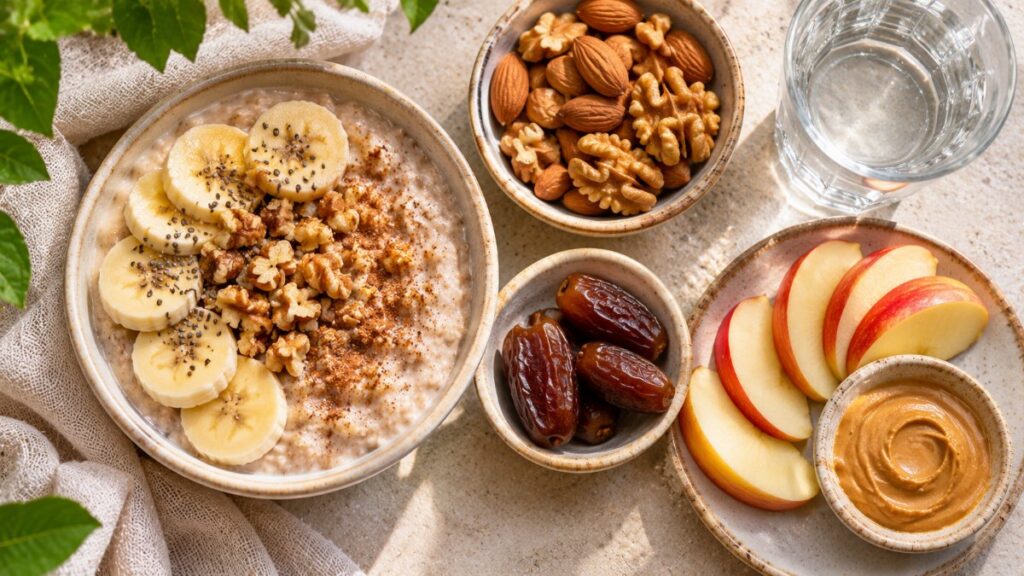
No food gives you the instant jolt of coffee, but foods that give you energy do it more steadily and without the crash. Food supports energy in three ways: it supplies calories, fiber-rich carbohydrates paired with protein release sugar into your blood slowly, and nutrients such as iron, vitamin B12 and magnesium keep the tiredness of a deficiency away. Good choices include oats, lentils y frijoles, eggs, yogurt, nuts, seeds and whole fruit, together with enough water, movement and sleep.
This article is for you if you are cutting back on coffee, cannot drink it, or feel flat by mid-afternoon. We will be honest about what food can and cannot do, show which energy foods supply what, and finish with a no-caffeine snack you can make on Sunday for the whole week.
Can foods that give you energy replace caffeine?
Yes, but it works differently. Caffeine is a stimulant: it makes you feel more alert without giving your body any fuel. Food is the fuel itself. When people talk about energy-boosting foods, they usually mean three things:
- Enough calories spread across the day, so you are not running on empty.
- Steady blood sugar, so you avoid the big rise and fall that follows a sugary snack.
- No hidden deficiency, because low iron or low B12 can make you tired no matter how much coffee you drink.
Add water and sleep and you have the whole picture. The NHS notes that caffeine’s effects can last up to 7 hours and disrupt sleep.
Why do some meals leave you tired an hour later?
Often it comes down to how fast the carbohydrates in a meal turn into blood sugar. The glycemic index (GI) ranks carbohydrate foods from 0 to 100 by how quickly and how much they raise blood sugar. Harvard’s Nutrition Source calls 55 or less low, 56 to 69 medium and 70 or more high. High-GI foods are digested quickly and cause bigger swings.
The glycemic load (GL) also accounts for how much carbohydrate a normal serving contains: 10 or under is low, 20 or more is high. Fiber, a coarser texture, less processing, and fat or acid in the same meal all slow the rise. That is why beans with olive oil and lemon behave very differently from a white roll. For a full food table, read our guide to what the glycemic index means.
Which high energy foods give you steady energy?
Each food brings something: a gentle effect on blood sugar, iron, B12 or magnesium. Mix two or three in a meal.
| Food | Serving | What it provides |
|---|---|---|
| Lentils, boiled | ½ cup | 3 mg iron; low glycemic load |
| White beans, canned | 1 cup | 8 mg iron |
| Black beans, cooked | ½ cup | 60 mg magnesium; low glycemic load |
| Firm tofu | ½ cup | 3 mg iron |
| Egg, cooked | 1 large | 1 mg iron; 0.5 mcg vitamin B12 |
| Salmon, cooked | 3 oz (85 g) | 2.6 mcg vitamin B12 |
| Milk, 2% fat | 1 cup (240 ml) | 1.3 mcg vitamin B12 |
| Plain yogurt, fat free | 6 oz (170 g) | 1.0 mcg vitamin B12 |
| Nutritional yeast, fortified | about ¼ cup | 8.3 to 24 mcg vitamin B12 (varies by brand) |
| Calabaza seeds, roasted | 1 oz (28 g) | 156 mg magnesium |
| Peanut butter, smooth | 2 tablespoons | 49 mg magnesium |
| Cashews, roasted | 1 oz (28 g) | 2 mg iron; 74 mg magnesium; low glycemic load |
| Oatmeal, cooked | 1 cup | Medium glycemic load |
| Apple or orange | 1 whole fruit | Low glycemic load |
| For contrast: sugar-sweetened drink | 12 fl oz (355 ml) | High glycemic load |
Source: NIH Office of Dietary Supplements fact sheets on iron, vitamin B12 and magnesium; Harvard T.H. Chan School of Public Health, The Nutrition Source, Carbohydrates and Blood Sugar (glycemic load lists).
Legumes appear again and again: slow carbohydrates, iron and magnesium in one spoonful. judías blancas are among the richest iron sources on the NIH list, and an egg or a pot of yogurt quietly covers part of your B12.

Could low iron or vitamin B12 be behind your tiredness?
Hierro
Iron is part of hemoglobin, the protein that carries oxygen in your blood. The NHS lists tiredness and lack of energy as a common symptom of iron deficiency anaemia, along with breathlessness, palpitations, pale skin and headaches. Heavy periods and pregnancy are common causes.
Men and women over 50 need 8 mg a day, women aged 19 to 50 need 18 mg, and 27 mg in pregnancy. Vegetarians need about 1.8 times more, because plant (nonheme) iron is absorbed less well than iron from meat and fish: the NIH estimates 14 to 18% absorption from mixed diets and 5 to 12% from vegetarian ones. Vitamin C helps, so squeeze lemon over lentils or eat a pepper with your beans. Do not count on espinaca for iron: compounds in the leaves make its iron poorly absorbed.
Vitamina B12
Adults need 2.4 mcg of B12 a day. It comes from animal foods and from fortified foods such as some cereals and nutritional yeast. Fatigue is one sign of deficiency, along with anaemia and tingling in the hands and feet. Older adults, vegans and vegetarians, people on metformin or long-term stomach acid medicines, and anyone who has had stomach surgery are most at risk. Our overview of the vegan diet, its benefits and its risks explains why plant-based eaters need a reliable B12 source.
One honest caveat: the NIH finds no evidence that B12 supplements raise energy in people who are not deficient. The “B12 shot for energy” only helps if you were low to begin with.
Magnesio
Magnesium is needed for energy production, and fatigue is an early sign of deficiency. Seeds, nuts, beans and whole grains are the best sources: see our list of magnesium-rich foods for the numbers.
Does drinking water help with tiredness?
It can. The NHS notes that even mild dehydration can make you feel tired. Before a second coffee at 3 pm, try a full glass of water and a few minutes outside.
How should you eat through the day for steady energy?
The NHS advice on tiredness is practical: eat regular meals and healthy snacks every 3 to 4 hours rather than a few large meals. For example:
- Desayuno: oats or whole grain bread with eggs, yogurt or nut butter. Our high-protein vegetarian breakfast ideas give you plenty of options.
- Mid-morning: a piece of fruit with a small handful of nuts.
- Almuerzo: lentils or fish, vegetables, a whole grain and some olive oil, with lemon.
- Afternoon: yogurt with seeds, or two energy balls (below), and a glass of water.
The NHS also notes that a 15-minute walk gives a short energy lift, that regular sleep and wake times matter, and that alcohol makes sleep lighter. We cover these habits in strategies for balanced energy y Por qué dormir es la piedra angular de un estilo de vida saludable.
What does Ayurveda say about energy and food?
The Ayurvedic tradition sees energy as the result of good digestion rather than a quick lift. What follows is the traditional view, not scientific evidence.
In Ayurveda, your digestive fire (agni) turns food into the body’s tissues, and well-digested food is said to build ojas, a deep vitality and resilience. Feeling heavy after meals is read as a sign that agni is weak or overloaded. The tradition recommends warm, freshly cooked food, the largest meal at midday when agni is considered strongest, and enough time between meals.
Ayurveda also sorts foods by their effect on the mind. Fresh, simple foods such as cooked grains, mung beans, fruit, milk and ghee are called sattvic and are said to give calm, clear energy. Strong stimulants, coffee included, are described as rajasic: they stir activity but can leave you restless and depleted. Jengibre and cumin are traditionally used to kindle agni.
Recipe: peanut butter energy balls without caffeine
These no-bake energy snacks pair oats with peanut butter and seeds, so you get carbohydrate together with protein, fat and fiber. Two tablespoons of peanut butter alone bring 49 mg of magnesium. Two balls with an apple make a solid afternoon snack.
Ingredients (about 14 balls)
- 1 cup (90 g) rolled oats
- ½ cup smooth peanut butter (no added sugar)
- 2 tablespoons chia seeds
- 2 tablespoons pumpkin seeds, roughly chopped
- 6 soft dates, pitted (or 2 tablespoons honey)
- ½ teaspoon cinnamon and a pinch of salt
- 1 to 2 tablespoons water, if needed
Method
- Blend the dates into a sticky paste in a food processor (skip this if using honey).
- Add the peanut butter, cinnamon and salt and pulse until smooth.
- Add the oats, chia and pumpkin seeds and pulse a few times, until the mixture holds together when pressed. Add water a spoon at a time if it is dry.
- Roll into walnut-sized balls with damp hands.
- Chill for 30 minutes. Keep in a closed box in the fridge for up to 5 days.
When should you be careful?
- Tiredness that does not go away with rest and sleep needs a doctor, not a food fix. The NHS advises seeing a GP.
- Do not start iron supplements on a hunch. The adult upper limit is 45 mg a day, and higher doses upset the stomach. A blood test should come first.
- Medicines: iron reduces the absorption of levothyroxine (take them at least 4 hours apart) and can make levodopa less effective. Proton pump inhibitors reduce iron absorption, and long-term use, like metformin, is linked to low B12.
- Pregnancy: iron needs rise to 27 mg a day and B12 to 2.6 mcg. Your doctor or midwife will advise on supplements.
- Cutting caffeine: reduce it gradually, because stopping suddenly can cause headaches and poor sleep.
- Alergias: swap peanut butter for sunflower seed butter in the recipe if you have a peanut allergy.
FAQ
What can I eat instead of coffee for energy?
Choose a snack that combines fiber-rich carbohydrate with protein or fat, such as an apple with cashews or yogurt with seeds. Drink a glass of water with it and, if you can, take a short walk. The lift is slower, but it does not crash.
What is the best breakfast for energy without caffeine?
Oats or whole grain bread with eggs, yogurt or nut butter, because they pair slower carbohydrates with protein. A spoon of pumpkin or chia seeds adds magnesium.
Do bananas give you energy?
Bananas supply quick carbohydrates and some magnesium (about 32 mg in a medium one, see our banana nutrition facts). Riper fruit has a higher glycemic index, so pair a ripe banana with nuts or yogurt for a steadier effect.
Can low iron make you tired?
Yes. Tiredness and lack of energy are among the most common symptoms of iron deficiency anaemia. Only a blood test can confirm it, so see your doctor before taking iron.
Sources
- NIH Office of Dietary Supplements. Iron: Fact Sheet for Health Professionals. National Institutes of Health. ods.od.nih.gov
- NIH Office of Dietary Supplements. Vitamin B12: Fact Sheet for Health Professionals. National Institutes of Health. ods.od.nih.gov
- NIH Office of Dietary Supplements. Magnesium: Fact Sheet for Health Professionals. National Institutes of Health. ods.od.nih.gov
- Harvard T.H. Chan School of Public Health. Carbohydrates and Blood Sugar. The Nutrition Source, 2025. nutritionsource.hsph.harvard.edu
- NHS. Self-help tips to fight tiredness. NHS website. nhs.uk
- NHS. Iron deficiency anaemia. NHS website. nhs.uk
This article is for information only and is not medical advice. If you have a health condition, are pregnant or take medication, talk to your doctor or pharmacist before changing your diet or starting a supplement.

 Español
 English
 Deutsch
 Français

