
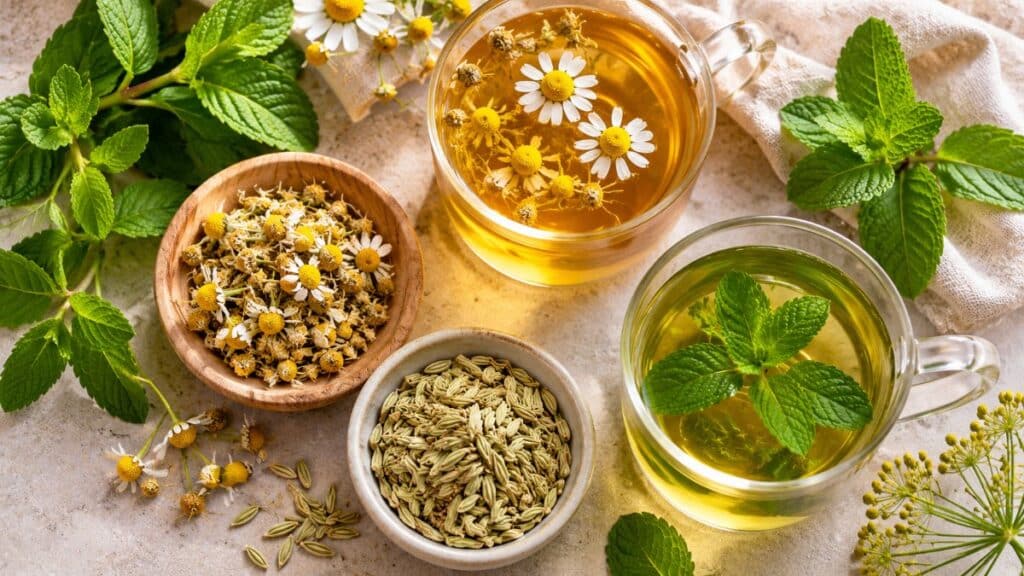
The natural remedies for indigestion and better digestion with the best evidence are surprisingly ordinary: more fibre added gradually, enough fluids, and regular movement, including a 10-15 minute walk after meals, which eased bloating in a small 2021 trial. For irritable bowel syndrome (IBS), enteric-coated peppermint oil capsules have good evidence, while probiotics give mixed results and hinojo or chamomile tea rest mostly on tradition. Blood in your stool or vomit, difficulty swallowing or unexplained weight loss need a doctor, not a home remedy.
This guide is for you if your stomach often feels heavy, bloated or slow and you want sensible home remedies first. We sort them by strength of evidence, give you one daily routine, look at the Ayurvedic approach, and list the warning signs that need a doctor.
Which natural remedies for digestion actually work?
“Natural” covers everything from a bowl of porridge to a capsule of plant oil, and they are not equal. Here is a quick overview.
| Remedy | What the evidence shows | Strength |
|---|---|---|
| Fibre and fluids | Standard NHS self-help advice for constipation: increase fibre gradually (oats, wheat bran, linseed), drink plenty of fluids. | Well established for constipation |
| Walking after meals | 2021 trial, 94 adults with functional bloating: a 10-15 minute walk after each meal for 4 weeks improved symptoms as much as a prokinetic drug, and more for post-meal fullness and bloating. | One small trial |
| Peppermint oil capsules (IBS) | 2022 review of 10 studies, 1,030 people: better than placebo for overall IBS symptoms and abdominal pain; more mild reflux and indigestion. | Good, for IBS specifically |
| Probiotics | IBS: a 2018 review of 53 studies, 5,545 people, suggested they may help but could not reach firm conclusions. Effects depend on the strain. | Mixed |
| Fennel tea | Approved in the EU as a traditional herbal medicine for mild spasmodic gut complaints, bloating and wind, based on long-standing use rather than trials. | Tradition |
Source: NHS, Constipation; Hosseini-Asl et al., Gastroenterology and Hepatology from Bed to Bench (2021); NCCIH, Peppermint Oil (2025) and Probiotics (2019); European Medicines Agency, fennel monograph (2024).
How do fibre and water help digestion?
Fibre adds bulk and holds water in your stool, so it moves through more easily. The NHS advice for constipation is to increase fibre gradually and to drink plenty of water and other fluids. Gradually is the key word. Going from almost no fibre to a big bowl of beans overnight is a classic recipe for gas and cramps.
Easy ways to add fibre over a week or two:
- A bowl of porridge with a spoonful of ground linseed for breakfast.
- Pulses a few times a week. Our guide on how to cook white beans shows how soaking and slow cooking make them gentler on the stomach.
- Fruit such as apples and grapes, which contain sorbitol and may help soften stools, according to the NHS.
- Vegetables at both main meals, from cooked greens to raw hinojo sliced thinly into a salad.
For a whole plate built around your gut, see our guide to gut health foods.
Does walking after eating help with bloating?
It seems to, and it costs nothing. In a 2021 randomised trial from Iran, 94 adults with functional abdominal bloating were split into two groups. One group took a 10-15 minute walk after each meal; the other took a standard prokinetic medicine (a drug that speeds up stomach emptying) plus an anti-gas agent. After 4 weeks, both groups improved in belching, wind, abdominal discomfort and the feeling of fullness after meals. For post-meal fullness and bloating, walking did better than the medicine.
It is one modest study, not the final word. Still, the NHS also says a daily walk or run can help you poo more regularly, and an easy stroll after meals has little downside.

Is peppermint oil good for IBS and indigestion?
Peppermint oil is the most evidence-backed herbal remedy on this list, but only for one condition: IBS in adults. NCCIH reports that a 2022 review of 10 studies with 1,030 participants found enteric-coated peppermint oil capsules better than placebo for overall symptoms and abdominal pain. The American College of Gastroenterology recommends it in its 2021 IBS guideline.
Two things to keep in mind:
- Capsules are not the same as tea. The studies used enteric-coated capsules, which release the oil in the intestine rather than the stomach. A cup of menta tea is a lovely drink, but it has not been shown to do the same job.
- It can cause heartburn. Side effects included mild acid reflux and indigestion. For ordinary indigestion, NCCIH notes there is no evidence that peppermint oil alone helps, and it may make indigestion worse for some people.
Do probiotics help digestion?
Sometimes, for some people, with some strains. That is the honest summary. According to NCCIH, probiotics may help overall IBS symptoms, and there is some evidence for constipation in adults, especially with Bifidobacterium lactis. In a 2017 review, people taking antibiotics who also took probiotics were roughly half as likely to get antibiotic-associated diarrhoea. But a benefit from one strain tells you nothing about another, and for most conditions nobody yet knows which strains, doses or durations work best.
A practical approach: enjoy natural yogurt, kefir and sauerkraut as normal foods. If you try a supplement for a specific problem, choose a named, studied strain, give it a few weeks, and stop if nothing changes.
Do ginger, fennel and chamomile tea help digestion?
These are the classic after-dinner teas across Europe and Asia, and they are mostly about tradition and comfort.
- Jengibre: the strongest research on jengibre is about nausea, especially in pregnancy, rather than bloating or heavy meals. Our guide to ginger tea benefits goes through the studies and gives a simple recipe.
- Fennel: the European Medicines Agency lists fennel fruit as a traditional herbal medicine for mild spasmodic gut complaints, bloating and wind. “Traditional” is an official category: it means the use is plausible and long-standing, not that clinical trials have proven it.
- Chamomile: a gentle, caffeine-free ritual. Enjoy it for what it is, and do not expect it to treat a digestive condition.
What does Ayurveda say about digestion?
Digestion sits at the heart of Ayurveda. The tradition describes agni, the “digestive fire”, and teaches that weak or erratic agni leaves behind ama, poorly digested residue seen as the root of many complaints. The following is the traditional view, not scientific evidence.
- Eat your main meal at midday, when agni is believed to be strongest, and keep dinner lighter and earlier.
- Leave some room: a common teaching is to fill the stomach about half with food, a quarter with liquid, and leave a quarter empty.
- Sip warm water, not iced drinks, with meals.
- Take a short, slow walk after eating. Classical texts describe a walk of about a hundred steps after meals, an idea that lines up nicely with the modern trial above.
Ayurveda adjusts all of this to your constitution, or dosha. For a calm introduction, read our Ayurvedic diet for beginners.
How can you improve digestion naturally? A simple daily routine
Try this for two weeks. Start small; you do not need every step on day one.
- Morning: a glass of water when you get up, then porridge with a spoonful of ground linseed and some fruit.
- Every meal: sit down, put your fork down between bites, and stop when you feel comfortably full rather than stuffed.
- After lunch and dinner: walk for 10-15 minutes at an easy pace.
- Through the day: keep a bottle of water in sight and drink regularly.
- Evening: a cup of fennel tea (recipe below) about an hour after dinner.
Fennel seed tea (1 cup)
- 1 teaspoon of fennel seeds, lightly crushed (about 1.5 g)
- 250 ml freshly boiled water
- Crush the seeds in a mortar or with the back of a spoon to release the aroma.
- Pour the boiling water over them and cover the cup.
- Steep for 15 minutes, then strain.
The EMA monograph uses 1.5 g in 250 ml, steeped for 15 minutes, up to three times a day, and advises adults not to use it for more than 2 weeks. If you like structure, the habits in our five healthy eating habits fit well around this routine.
When should you see a doctor about digestive problems?
Home remedies are for mild, occasional symptoms. See a doctor promptly if you notice any of these (based on NIDDK and NHS guidance):
- blood in your stool, black and tar-like stools, or bloody vomit
- difficulty or pain when swallowing
- weight loss without trying or loss of appetite
- frequent vomiting
- severe, constant abdominal pain, or bloating that does not go away
- yellowing of your eyes or skin
- a sudden change in your bowel habits, or constipation that does not improve with treatment
- pain in your chest, jaw, neck or arm, or shortness of breath: seek urgent help
Precautions with natural digestive remedies
- Hinojo is not recommended in pregnancy or while breastfeeding, according to the EMA, and should be avoided if you are allergic to plants in the zanahoria family, such as apio, eneldo, aniseed or coriander, or to mugwort pollen.
- Probiotics carry higher risks for people who are seriously ill or have weakened immune systems.
- Medicines: herbs can interact with medication, and some medicines, such as opioid painkillers, cause constipation. Ask your pharmacist, and do not stop a prescribed medicine without talking to your doctor.
FAQ
What is the fastest natural way to relieve bloating?
A gentle 10-15 minute walk after eating is a good first step, and a small trial found it eased post-meal fullness and bloating. Loosen tight clothing, sip warm water, and avoid fizzy drinks for the rest of the day.
What is the best tea for digestion?
Fennel tea has official EU recognition as a traditional remedy for bloating and wind. Ginger tea is better studied, but mainly for nausea. menta tea is pleasant, but the IBS evidence comes from peppermint oil capsules, not tea.
What are the best home remedies for indigestion?
Eat smaller meals slowly and take a short walk afterwards, which eased post-meal fullness in a small trial. Peppermint oil on its own has no evidence for indigestion and may worsen heartburn, although NCCIH notes some peppermint and caraway oil combinations may help.
Can natural remedies replace medication for IBS?
Sometimes they work alongside it. Peppermint oil capsules are recommended in IBS guidelines, but IBS should be diagnosed by a doctor first, because its symptoms overlap with conditions that need different treatment.
Sources
- NHS. Constipation. nhs.uk/conditions/constipation
- National Institute of Diabetes and Digestive and Kidney Diseases (NIDDK). Symptoms and Causes of Indigestion. NIH. niddk.nih.gov/…/indigestion-dyspepsia/symptoms-causes
- Hosseini-Asl MK, Taherifard E, Mousavi MR. The effect of a short-term physical activity after meals on gastrointestinal symptoms in individuals with functional abdominal bloating: a randomized clinical trial. Gastroenterology and Hepatology from Bed to Bench, 2021. journals.sbmu.ac.ir/ghfbb/…/1976
- National Center for Complementary and Integrative Health (NCCIH). Peppermint Oil. NIH, updated 2025. nccih.nih.gov/health/peppermint-oil
- National Center for Complementary and Integrative Health (NCCIH). Probiotics: What You Need To Know. NIH, updated 2019. nccih.nih.gov/health/probiotics-what-you-need-to-know
- European Medicines Agency (EMA), HMPC. European Union herbal monograph on Foeniculum vulgare Miller subsp. vulgare var. dulce, fructus. Revision 1, 2024. ema.europa.eu (PDF)
This article is for information only and is not medical advice. If you have a health condition, are pregnant or take medication, talk to your doctor or pharmacist before changing your diet or starting a supplement.


 Español
 English
 Deutsch
 Français

