
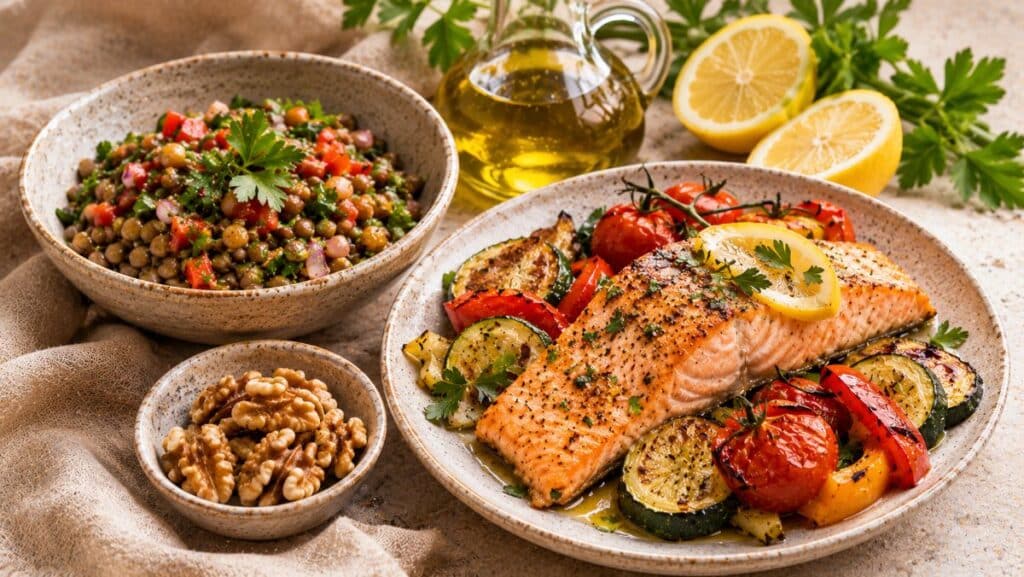
El Mediterranean diet is the eating pattern European liver, diabetes and obesity societies prefer for fatty liver disease (now called MASLD). It helps in two ways: it supports weight loss, and losing 5% or more of body weight reduces liver fat, and it appears to lower liver fat even before much weight is lost. In a small crossover trial, liver fat fell by 39% after six weeks on a Mediterranean diet, with only about 1 kg of weight loss.
Contents 9
- What is fatty liver disease (MASLD)?
- Does the Mediterranean diet reduce fat in the liver?
- How much weight do you need to lose for fatty liver?
- What should you eat more of, and what less?
- What does a Mediterranean week for fatty liver look like?
- What does Ayurveda say about the liver and diet?
- Who should be careful?
- FAQ
- Sources
This guide is for you if a scan or blood test has shown fat in your liver and you want to know what to eat. You will find what the trials actually show, how much weight loss makes a difference, what to cut back on, a simple week of Mediterranean meals and the questions to take to your doctor.
What is fatty liver disease (MASLD)?
Fatty liver means fat has built up inside the liver cells. When it comes with at least one cardiometabolic risk factor, such as extra weight around the waist, high blood sugar, high blood pressure or abnormal blood fats, doctors now call it metabolic dysfunction-associated steatotic liver disease, or MASLD. You may still see the older name, non-alcoholic fatty liver disease (NAFLD). In some people fat leads to inflammation and, over years, to scarring (fibrosis). That is why the goal of eating well here is not only a number on the scale but a healthier liver.
Does the Mediterranean diet reduce fat in the liver?
Yes, and the evidence comes from two kinds of trials: short, tightly controlled studies that measure liver fat directly, and larger, longer ones that follow real people.
- Ryan and colleagues (Journal of Hepatology, 2013). Twelve people with fatty liver ate a Mediterranean diet and a low-fat, high-carbohydrate diet for six weeks each, in random order, with a six-week break between. On the Mediterranean diet, liver fat measured by magnetic resonance fell by 39% from baseline and insulin resistance improved. Weight loss was small on both diets (about 1 kg on the Mediterranean diet, 2.4 kg on the low-fat diet), and the low-fat diet did not bring the same liver improvement.
- DIRECT-PLUS (Gut, 2021). 294 people with abdominal obesity were followed for 18 months on one of three diets. Liver fat fell by 39% on a “green” Mediterranean diet, 20% on a classic Mediterranean diet and 12% on standard healthy-eating advice. The green version added 28 g of walnuts, 3-4 cups of green tea and a daily shake of the water plant Mankai (100 g as frozen cubes).
The Ryan trial is very small, so treat its numbers as a strong hint rather than proof. Together with DIRECT-PLUS and the observational studies the European guideline cites, the direction is consistent: a Mediterranean pattern helps the liver, and a stricter, plant-heavier version may help more.

How much weight do you need to lose for fatty liver?
If you are carrying extra weight, weight loss is still the most powerful lever. The 2024 European guideline from EASL, EASD and EASO, as summarised by its authors, sets these markers:
| Pérdida de peso | What it can do for the liver |
|---|---|
| 5% or more of body weight | Reduces liver fat (steatosis) |
| 5-10% | Reduces liver inflammation |
| 10% or more | Can reverse fibrosis (scarring) |
| 3-5% (people of normal weight with MASLD) | May still help |
Source: EASL-EASD-EASO Clinical Practice Guidelines on MASLD, Journal of Hepatology 2024, as summarised by Horn and Tacke, eGastroenterology 2025.
For a person weighing 90 kg, 5% is 4.5 kg and 10% is 9 kg. That is a realistic goal over several months, not weeks. The guideline also advises at least 150 minutes a week of moderate activity or 75 minutes of vigorous activity, and names the Mediterranean diet as the preferred dietary model.
What should you eat more of, and what less?
Think of the plate rather than single “liver foods”. The pattern that showed results is built like this:
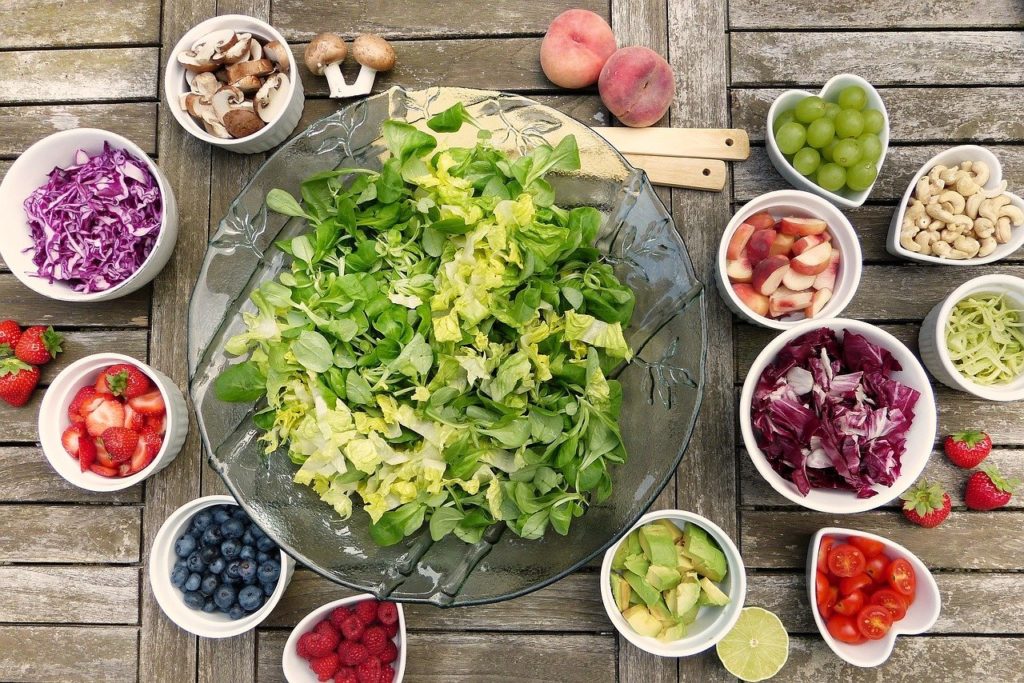
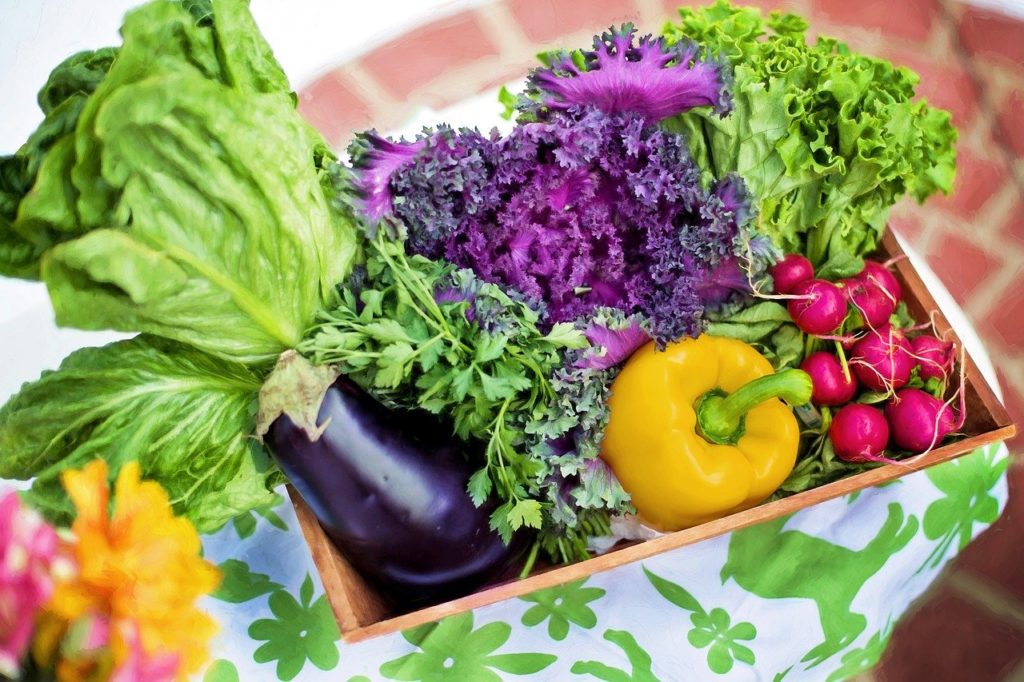
- Every day: vegetables at lunch and dinner, fruit, whole grains such as oats, bulgur y wholegrain bread, y extra virgin olive oil as your main fat.
- Several times a week: beans, lentils y chickpeas; a handful of nuts, for example walnuts; fish, including oily fish como salmón.
- Less: red and processed meat, sugar-sweetened drinks and ultra-processed foods. The guideline links sugary drinks and red meat to a higher risk of MASLD and says ultra-processed foods, sugary drinks and alcohol should be minimised.
- Alcohol: the guideline discourages drinking with MASLD, especially at moderate or high intake, and says people with advanced fibrosis or cirrhosis should stop completely. The Mediterranean glass of red wine is not part of the plan here.
For the full picture of the pattern itself, see our Mediterranean diet entry, and for why aceite de oliva, nuts and fish matter, all about high-quality fats.
What does a Mediterranean week for fatty liver look like?
Here is a simple week to show the pattern in practice. Portions depend on your energy needs, so if you need to lose weight, ask a dietitian to set them. Breakfast can rotate between plain yogurt with fruit and walnuts, oat porridge with grated apple y cinnamon, and wholegrain toast with tomate, olive oil and an egg.
| Day | Almuerzo | Cena |
|---|---|---|
| Monday | Lentil soup with lemon, wholegrain bread | Baked salmon, roasted vegetables, a spoon of olive oil |
| Tuesday | Chickpea y espinaca stew | Large green salad with judías blancas, walnuts and olive oil dressing |
| Wednesday | Bulgur salad with tomatoes, pepino, perejil and chickpeas | Vegetable omelette, sliced tomatoes |
| Thursday | Bean soup with zanahorias y apio | White fish baked with tomatoes and olives, boiled potatoes |
| Friday | Wholegrain pasta with chickpeas and greens | Grilled vegetables, a small piece of feta, wholegrain bread |
| Saturday | Oven-baked vegetables with lentils | sardinas o caballa, green salad, quinoa |
| Sunday | Chicken with vegetables cooked in olive oil | Leftover soup and a bowl of yogurt with fruit |
Drinks: water, unsweetened tea or coffee. Snacks, if you need them: fruit, a small handful of nuts or plain yogurt.
What does Ayurveda say about the liver and diet?
In the traditional Ayurvedic view, the liver is closely tied to Pitta, the dosha of heat and transformation, and a sluggish, heavy state of digestion is associated with excess Kapha. Traditional advice therefore leans towards freshly cooked, warm, lighter meals, plenty of vegetables and bitter greens, and avoiding heavy, fried and very sweet foods and alcohol. This is tradition, not clinical evidence, but in practice it points the same way as the Mediterranean plate. If you are curious, start with our Ayurvedic diet for beginners.
Who should be careful?
- Talk to your doctor first. Fatty liver needs a proper diagnosis and follow-up, including a check for fibrosis. Diet supports medical care; it does not replace it.
- Advanced fibrosis or cirrhosis. Nutrition needs are different, and rapid weight loss or strict diets can be harmful. Follow your hepatologist’s plan.
- Diabetes medication. Cutting calories and carbohydrate can lower blood sugar. If you take insulin or tablets that can cause low blood sugar, ask your doctor how to adjust.
- Supplements. Do not start “liver cleanse” products or herbal supplements without asking your doctor, because some can harm the liver.
Read next: Does the Mediterranean diet work for weight loss? y which foods reduce inflammation.
FAQ
Can fatty liver be reversed with diet?
Often, yes, especially early on. The European guideline says losing 5% of body weight reduces liver fat and 10% or more can reverse fibrosis. A Mediterranean diet combined with regular activity is the recommended way to get there, under medical follow-up.
Is the Mediterranean diet good for fatty liver even without weight loss?
It seems to help. In a small six-week crossover trial, liver fat fell by 39% on a Mediterranean diet with only about 1 kg of weight loss. Weight loss still adds a lot on top, so aim for both if you are overweight.
Is coffee allowed with fatty liver?
Plain coffee or tea without sugar fits a Mediterranean pattern. What to avoid are sweetened drinks, because the guideline links sugar-sweetened beverages to a higher risk of MASLD.
Can I drink wine on a Mediterranean diet for fatty liver?
Better not. The 2024 European guideline discourages alcohol in MASLD and says it should be stopped completely with advanced fibrosis or cirrhosis.
Sources
- EASL, EASD, EASO. EASL-EASD-EASO Clinical Practice Guidelines on the management of metabolic dysfunction-associated steatotic liver disease (MASLD). Journal of Hepatology, 2024;81:492-542. Full text (PDF)
- Horn P, Tacke F. Key takeaways from the updated multidisciplinary European MASLD guidelines. eGastroenterology, 2025 (summary). news-medical.net
- Ryan MC, et al. The Mediterranean diet improves hepatic steatosis and insulin sensitivity in individuals with non-alcoholic fatty liver disease. Journal of Hepatology, 2013. PubMed 23485520
- Yaskolka Meir A, et al. Green-Mediterranean diet and intrahepatic fat in the DIRECT PLUS randomised trial. Gut, 2021 (reported by Ben-Gurion University). eurekalert.org
This article is for information only and is not medical advice. If you have a health condition, are pregnant or take medication, talk to your doctor or pharmacist before changing your diet or starting a supplement.
Terms in this article
PepinoZanahoriaDieta mediterráneaJudías blancasEspinacaTomatesApioPerejillentejasAvenagarbanzosExtra Virgin Olive OilCinnamonSalmónQuinuaFeta cheese

 Español
 English
 Deutsch
 Français

