
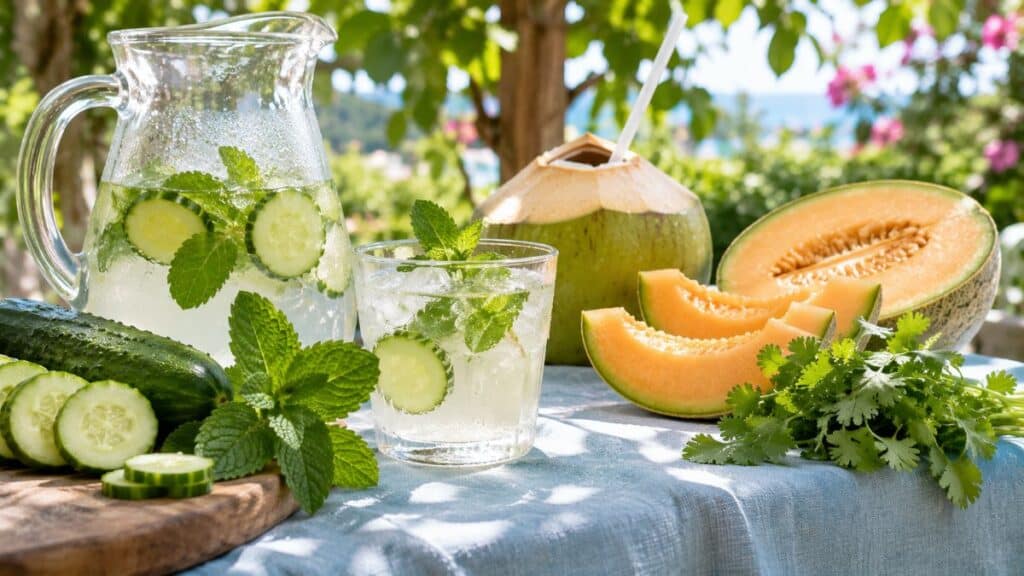
A pitta diet favours cooling, mildly flavoured foods with sweet, bitter and astringent tastes: cucumber, courgette, leafy greens, sweet ripe fruit, basmati rice, oats, mung beans, milk, ghee and coconut, spiced with coriander, fennel and cardamom. It cuts back on the heating tastes, so less chilli, raw garlic, vinegar, sour and salty foods, alcohol and coffee. This is traditional Ayurvedic guidance rather than tested science, but several of its rules match modern advice for heartburn and hot weather.
This guide is for you if you lean towards Pitta or simply run hot: irritable when lunch is late, quick to flush, worse in summer. You will find a food table sorted by taste and cooling quality, a sample day, a soup recipe, seasonal notes and an honest check against modern nutrition.
What is pitta dosha, and how do you know it is out of balance?
In Ayurveda, Pitta is the dosha of fire and water. It is said to govern digestion, metabolism and body heat, and its qualities are hot, sharp, light and slightly oily. A typical pitta body type is medium and muscular, with warm skin, a strong appetite and a focused, driven mind. If the three doshas are new to you, read our guide to the Ayurveda doshas and how to know yours first.
Tradition describes excess Pitta as “too much fire”: sharp hunger and irritability when a meal is late, a burning stomach after spicy or fried meals, feeling overheated in summer, loose stools after rich food or alcohol. The answer follows Ayurveda’s basic rule, opposites balance: heat is calmed by cooling foods, sharpness by mild ones.
What foods balance pitta dosha? A table by taste and quality
Ayurveda links each taste (rasa) to a heating or cooling quality (virya). Sweet, bitter and astringent tastes are considered cooling and calm Pitta. Pungent, sour and salty tastes are heating and increase it. Lists vary between teachers, so treat the table as the common ground rather than a strict rulebook.
| Food group | Favour (cooling: sweet, bitter, astringent) | Reduce (heating: pungent, sour, salty) |
|---|---|---|
| Grains | Basmati rice, oats, wheat, barley, couscous | Corn, rye, buckwheat in large amounts |
| Vegetables | Cucumber, courgette, leafy greens, broccoli, cauliflower, asparagus, green beans, sweet potato, squash, fennel, celery, peas | Chilli, raw onion, raw garlic, radish, lots of tomatoes |
| Fruit | Sweet ripe fruit: melon, pears, sweet grapes, pomegranate, figs, sweet apples, coconut | Sour or unripe fruit, grapefruit, lots of lemon |
| Legumes | Mung beans, chickpeas, split peas, red lentils in moderation | Heavily spiced or fried bean dishes |
| Dairy | Milk, ghee, unsalted butter, fresh soft cheese | Sour yogurt, sour cream, aged salty cheese |
| Oils and nuts | Ghee, coconut oil, olive oil in moderation, soaked almonds, sunflower and pumpkin seeds | Mustard and sesame oil, salted or roasted nuts, peanuts |
| Herbs and spices | Coriander leaf and seed, fennel, cardamom, turmeric, cumin in small amounts, dill | Cayenne, chilli flakes, mustard seeds, cloves, lots of dried ginger |
| Drinks | Cool (not iced) water, coconut water, fennel or coriander seed tea, milk with cardamom | Alcohol, coffee, fizzy and iced drinks |
Source: traditional Ayurvedic food guidance for Pitta, summarised by Nutriveda. These are traditional associations, not measured effects.
Most of the “favour” column is ordinary, healthy food. Cucumber, courgette (zucchini) and fresh coriander (cilantro) are the classic cooling trio. Fat is not the enemy here: ghee is traditionally seen as cooling and is used in small amounts to carry spices.
Which foods aggravate pitta the most?
If you change only three things, tradition points at hot chilli, alcohol and fried or very salty food. Next come sour foods (vinegar, pickles, sour yogurt), strong coffee on an empty stomach, and eating while angry or rushed: Ayurveda counts your mood as part of the meal.

Does modern nutrition agree with the pitta diet?
Partly. No large trial has tested a pitta diet, and NCCIH notes there is little scientific evidence on Ayurveda for most health issues, with most trials small or poorly designed. A 2014 review in the Journal of Ayurveda and Integrative Medicine proposed that prakriti types may be distinct phenotypes linked to genotypes, and that diet could one day be personalised from early life. That is a hypothesis to test, not a finding. Where you can compare is rule by rule:
| Pitta rule | What mainstream sources say | Match |
|---|---|---|
| Less chilli and spicy food | NIDDK lists spicy foods among common triggers of reflux symptoms | Good, if you get heartburn |
| Less alcohol and coffee | NIDDK lists alcohol and caffeine as common reflux triggers; NHS advises avoiding alcohol and caffeine in a heatwave | Good |
| Fewer sour foods (tomatoes, citrus) | NIDDK names acidic foods such as citrus and tomatoes as common triggers | Good, if you get heartburn |
| Less fried and fatty food | NIDDK lists high-fat foods as a common trigger | Good |
| Mint as a cooling herb | NIDDK lists mint as a possible reflux trigger | Conflict for reflux sufferers |
| Cool, not iced, drinks | NHS advises cold food and regular cold drinks in hot weather | Partial: cold drinks are fine in a heatwave |
| Eating by dosha type | Dosha typing is not yet validated; evidence for Ayurveda is limited (NCCIH) | Tradition only |
Sources: NIDDK, Eating, Diet and Nutrition for GER and GERD; NHS, Heatwave: how to cope in hot weather; NCCIH, Ayurvedic Medicine: In Depth; Dey and Pahwa, 2014 (full references below).
Remember the mint row: Ayurveda calls mint cooling, yet some people with reflux find it makes symptoms worse. If that is you, use coriander and fennel instead.
Which pitta-friendly foods are rich in potassium?
A bonus of the cooling plate: many of its foods are good sources of potassium, which the Dietary Guidelines for Americans name as a nutrient of public health concern. NIH recommends about 3,400 mg a day for adult men and 2,600 mg for women.
| Food (standard portion) | Calories | Potassium (mg) |
|---|---|---|
| Butternut squash, cooked (1 cup) | 82 | 582 |
| Sweet potato, cooked (1 cup) | 190 | 572 |
| Cantaloupe melon (1 cup) | 60 | 473 |
| Coconut water, unsweetened (1 cup) | 43 | 396 |
| Honeydew melon (1 cup) | 61 | 388 |
| Lentils, cooked (1/2 cup) | 115 | 366 |
| Milk, low fat 1% (1 cup) | 102 | 366 |
| Avocado (1/2 cup) | 120 | 364 |
| Fennel bulb, raw (1 cup) | 27 | 360 |
| Summer squash, cooked (1 cup) | 18 | 296 |
Source: Dietary Guidelines for Americans, Food Sources of Potassium (USDA FoodData Central, 2019). Recommended intakes: NIH Office of Dietary Supplements.
What does Ayurveda say about the pitta season?
In the traditional calendar, Pitta builds up in the hot months, so summer and the heat of late summer are when this diet matters most. Practical seasonal notes from tradition:
- Summer: lean on melons, cucumbers, courgettes, sweet cherries, green beans and fresh herbs.
- Early autumn: add cooked squash, sweet potato and pears as the weather turns.
- Winter: a pitta type can eat warmer, more spiced food than in July. If you lean Vata-Pitta, the cold months call for the grounding foods in our vata diet guide.
If you lean Pitta-Kapha, combine this list with our kapha diet guide: keep the cooling tastes, but go lighter on dairy, sweets and oil.
What does a pitta diet look like for one day?
- On waking: a glass of room-temperature water.
- Breakfast: oat porridge cooked in milk or oat milk with a pinch of cardamom, topped with a sliced pear and a few soaked, peeled almonds.
- Lunch (main meal): basmati rice, chickpeas or mung beans with coriander and a little cumin, steamed green beans with a teaspoon of ghee, cucumber slices with fresh coriander.
- Afternoon: a bowl of melon or a cup of coconut water.
- Dinner: the courgette and coconut soup below, with a piece of flatbread.
- Evening: a cup of fennel seed tea.
On a busy day, a bowl of kitchari with plenty of coriander and no chilli works for lunch or dinner. For the habits behind this plan, see our Ayurvedic diet for beginners.
Recipe: cooling courgette, pea and coconut soup (serves 2 to 3)
- 1 tablespoon ghee or coconut oil
- 1/2 teaspoon cumin seeds
- 1/2 teaspoon fennel seeds
- 1 teaspoon ground coriander
- 1/4 teaspoon ground turmeric
- 2 medium courgettes (about 400 g), diced
- 150 g frozen peas
- 600 ml water or light vegetable stock
- 100 ml coconut milk
- a small bunch of fresh coriander
- a pinch of salt
- Warm the ghee over medium heat. Stir the cumin and fennel seeds for about 30 seconds, until fragrant but not brown.
- Stir in ground coriander and turmeric for 10 seconds, then add the courgettes. Cook for 3 to 4 minutes.
- Pour in the water, bring to a simmer and cook for 10 minutes, until the courgettes are soft.
- Add the peas and simmer for 3 more minutes.
- Off the heat, add the coconut milk and most of the coriander and blend until smooth.
- Season with salt and serve warm, not piping hot, with the remaining coriander on top.
Who should be careful with a pitta diet?
- Frequent heartburn. Regular heartburn is a reason to see a doctor. If symptoms come at night, NIDDK suggests eating at least 3 hours before lying down.
- Kidney disease or certain medicines. NIH warns that people with chronic kidney disease, and some people on ACE inhibitors or potassium-sparing diuretics, can develop high blood potassium. Ask your doctor before adding lots of coconut water, squash and melon.
- Ayurvedic supplements. NCCIH reports that some Ayurvedic preparations contain lead, mercury or arsenic, and in a 2015 survey 40 percent of users had high blood lead levels. Stick to food and kitchen spices.
- Restrictive eating. If “avoid” lists make you anxious, keep only the broad habits: milder spice, less alcohol, calmer meals.
- Pregnancy, children, medication. Talk to your doctor before major diet changes.
FAQ
What should pitta dosha eat for breakfast?
Something mild and filling: oat porridge with milk and cardamom, sweet ripe pears, or bread with fresh soft cheese and cucumber. Tradition advises not skipping breakfast, because a hungry Pitta gets irritable.
Is coffee bad for pitta?
Ayurveda sees coffee as heating and sharp, so one cup at most, after food rather than on an empty stomach. If coffee gives you heartburn, that fits NIDDK, which lists caffeine among common reflux triggers.
Can pitta types eat spicy food?
Yes, in small amounts. Mild aromatic spices such as coriander, fennel, cardamom and a little cumin are favoured; keep chilli, cayenne and raw garlic for occasional meals, especially in summer.
How should vata-pitta or pitta-kapha types eat?
Follow the season and whichever dosha feels stronger right now. Vata-Pitta needs warm, moist, mildly spiced meals in cold weather; Pitta-Kapha does best with cooling but light food, with less dairy and sugar.
Sources
- National Center for Complementary and Integrative Health (NCCIH). Ayurvedic Medicine: In Depth. NIH, updated 2019. nccih.nih.gov
- Dey S, Pahwa P. Prakriti and its associations with metabolism, chronic diseases, and genotypes: possibilities of new born screening and a lifetime of personalized prevention. Journal of Ayurveda and Integrative Medicine, 2014. PubMed 24812471
- National Institute of Diabetes and Digestive and Kidney Diseases (NIDDK). Eating, Diet, and Nutrition for GER and GERD. niddk.nih.gov
- NHS. Heatwave: how to cope in hot weather. nhs.uk
- U.S. Department of Agriculture and U.S. Department of Health and Human Services. Food Sources of Potassium. Dietary Guidelines for Americans (data: USDA FoodData Central, 2019). dietaryguidelines.gov
- NIH Office of Dietary Supplements. Potassium: Fact Sheet for Consumers. ods.od.nih.gov
This article is for information only and is not medical advice. If you have a health condition, are pregnant or take medication, talk to your doctor or pharmacist before changing your diet or starting a supplement.
 English
 Deutsch
 Español
 Français

