
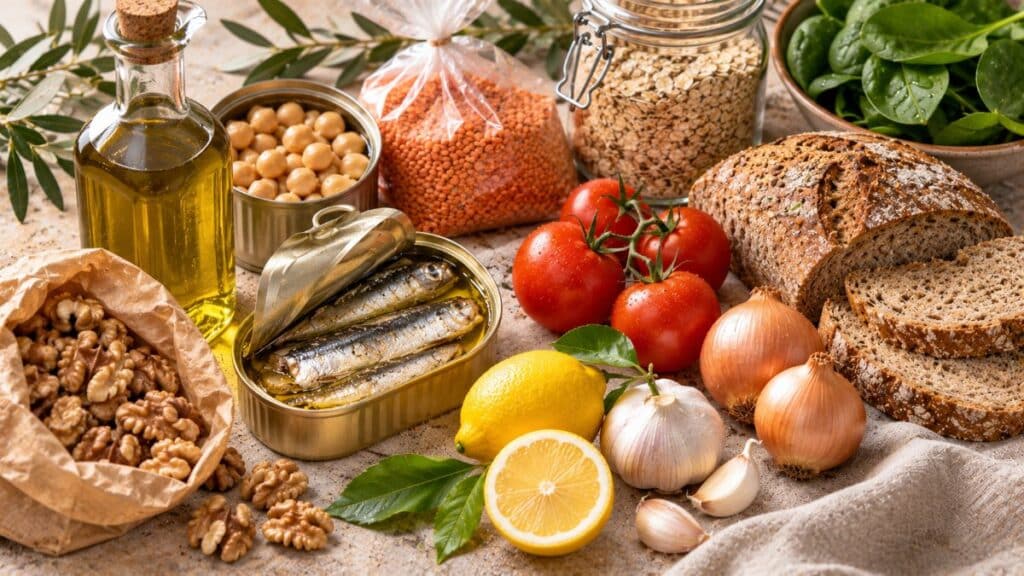
A Mediterranean diet shopping list is built around plant foods: vegetables, fruit, whole grains, beans, chickpeas and lentils, nuts, extra virgin olive oil, herbs and spices, plus fish and seafood at least twice a week. Eggs, poultry, yogurt and cheese go in the basket in moderate amounts, while red meat, processed meat and sweets are occasional buys. Almost everything on the list is sold in any European supermarket, often as own-brand basics.
Contents 10
- What goes on a Mediterranean diet shopping list?
- Mediterranean diet shopping list by supermarket aisle
- What do the key staples give you per portion?
- How do you read labels in a European supermarket?
- What can you buy less often?
- What does Ayurveda say about shopping for a Mediterranean-style diet?
- How do you turn the list into a week of meals?
- Who should be careful?
- FAQ
- Sources
This list is for you if you want to eat the Mediterranean way without hunting for specialist products. You will find the list organised by supermarket aisle, a table of what the key staples give you per portion, how to read the labels that matter, a sample weekly basket and a 20-minute chickpea and spinach pan to start with.
What goes on a Mediterranean diet shopping list?
The Mediterranean diet pyramid, first drawn in the 1990s and revised since, keeps the same shape. In a 2025 review in The American Journal of Clinical Nutrition, Hu and colleagues describe its base as plant foods eaten at almost every meal: vegetables, fruits, nuts, whole grains, olive oil and spices. Seafood is eaten at least twice a week, eggs, poultry and dairy daily to weekly, and red meat, processed meat and sweets no more than a few times a month. Water is the main drink.
Turn that into a basket and the rule of thumb is simple to remember: most of the trolley is plants, the protein comes mostly from legumes and fish, and the fat comes from olive oil and nuts. For the background on the eating pattern itself, see our encyclopedia entry on the Mediterranean diet.
Mediterranean diet shopping list by supermarket aisle
Fruit and vegetables
- Onions, garlic and lemons: the base of most dishes and dressings.
- Tomatoes, peppers, courgettes, aubergines in summer; cabbage, carrots, leeks, cauliflower and squash in autumn and winter.
- Leafy greens: spinach, kale, rocket, lettuce.
- Fresh herbs: parsley, dill, basil, mint.
- Seasonal fruit: apples, pears, oranges, grapes, figs, berries.
Bread, grains and pasta
- Wholemeal or wholegrain bread, where a whole grain flour is the first ingredient.
- Oats, bulgur, brown rice, buckwheat, wholewheat pasta and couscous.
Tins and jars
- Chickpeas, white beans, kidney beans and lentils in tins or jars.
- Chopped tomatoes and passata.
- Sardines, mackerel and tuna, in olive oil or water.
- Olives, capers and roasted peppers.
Dry goods, nuts and seeds
- Dried lentils (red lentils cook in about 15 minutes), dried chickpeas and beans.
- Walnuts, almonds, hazelnuts; sunflower, pumpkin and sesame seeds; tahini.
Oils, vinegar, herbs and spices
- Extra virgin olive oil for cooking and for raw use.
- Red or white wine vinegar.
- Dried oregano, thyme, bay leaves, paprika, cumin, black pepper, chilli flakes.
Chilled
- Plain yogurt (Greek-style or regular), feta or other white brine cheese, eggs.
- Fresh fish and chicken, in the amounts you plan to cook this week.
Freezer
- Frozen spinach, peas, green beans and mixed vegetables.
- Frozen fish fillets and frozen berries.
What do the key staples give you per portion?
A handful of foods do most of the work on this list. Here is what a normal portion of each provides, from the USDA FoodData Central database.
| Staple | Portion | Energy | Protein | Fibre | Worth knowing |
|---|---|---|---|---|---|
| Extra virgin olive oil | 1 tablespoon (13.5 g) | 119 kcal | 0 g | 0 g | Almost pure fat, mostly monounsaturated |
| Chickpeas, canned, drained and rinsed | 100 g | 137 kcal | 7.0 g | 5.9 g | Ready to use |
| Lentils, boiled | 100 g | 116 kcal | 9.0 g | 7.9 g | 3.3 mg iron |
| Oats, dry | 40 g | 152 kcal | 5.3 g | 4.0 g | One bowl of porridge |
| Walnuts | 28 g (about 7 nuts) | 183 kcal | 4.3 g | 1.9 g | Plant omega-3 (ALA) |
| Sardines, canned in oil, drained, with bone | 92 g (1 small tin) | 191 kcal | 22.6 g | 0 g | 351 mg calcium, about 0.9 g EPA + DHA |
| Brown rice, cooked | 100 g | 123 kcal | 2.7 g | 1.6 g | Whole grain |
Source: USDA FoodData Central, SR Legacy and Foundation records (FDC 171413, 2644288, 172421, 173904, 170187, 175139, 169704). Portions other than 100 g are calculated from the 100 g values. Values rounded.
Two things stand out. Legumes give you protein and fibre together for little money, which is why chickpeas and lentils sit at the centre of the basket. And one small tin of sardines covers a fish meal with calcium from the soft bones and long-chain omega-3 fats. More on each in our entries on chickpeas, lentils and walnuts.

How do you read labels in a European supermarket?
- Compare the unit price, not the pack price. Under EU Directive 98/6/EC, shops show a unit price: the final price including VAT for one kilogram, one litre or another standard unit. It is printed on the shelf label, usually in small type next to the main price, and it is the only fair way to compare a 400 g tin with a 2 kg bag.
- Olive oil: for dressings and everyday cooking, look for the words “extra virgin olive oil”. “Olive oil” alone is usually a blend with refined oil. Our extra virgin olive oil entry explains the grades.
- Bread: a brown colour is not proof of whole grain. Read the ingredient list: a wholemeal or whole grain flour should come first. See our entry on whole wheat bread.
- Tinned legumes and fish: both often contain added salt. Draining and rinsing legumes is part of how the canned chickpeas in the table above were measured. For fish, compare the salt line in the nutrition table between brands.
- Yogurt: choose plain and add your own fruit or a teaspoon of honey, so you decide how much sugar goes in.
What can you buy less often?
Nothing is banned, but the top of the pyramid is meant to be small: red meat, processed meats such as salami and sausages, pastries, biscuits, sweets and sugary drinks. In practice, if these make up a large part of your current trolley, swapping a few of them each week for legumes, fish, nuts and fruit is the change that matters most. If cost is your main worry, we work through it in a Mediterranean week on a budget.
What does Ayurveda say about shopping for a Mediterranean-style diet?
Ayurveda does not talk about the Mediterranean diet, but its traditional advice on shopping overlaps with it in a few places. It favours fresh, seasonal and local food over long-stored products, food that is cooked and eaten warm, and the use of spices such as cumin, ginger and black pepper to support agni, the digestive fire. Legumes are valued, but tradition recommends cooking them well and spicing them, so they are easier to digest. This is a traditional view, not a scientific finding. If you want to see how a Mediterranean basket can be adapted to your dosha, start with our guide to the Ayurvedic diet for beginners.
How do you turn the list into a week of meals?
A sample basket for one person for a week, to adjust to your appetite and household:
- 2 tins of chickpeas, 1 tin of white beans, 500 g dried red lentils
- 2 tins of sardines or mackerel, 1 portion of fresh fish
- 1 bag of oats, 1 loaf of wholemeal bread, 500 g bulgur or brown rice
- 2 tins of chopped tomatoes, 1 jar of olives
- 1 bag of frozen spinach, 1 kg onions, 1 head of garlic, 3-4 lemons
- Fresh seasonal vegetables for 5-6 portions a day and fruit for 2-3 portions a day
- 1 large pot of plain yogurt, 6 eggs, 200 g feta
- 1 bag of walnuts, extra virgin olive oil if you are running low
Here is a pan you can cook on the first evening, using only items from the list.
Chickpeas with tomato and spinach
2 portions, 20 minutesIngredients
- 1 tablespoon extra virgin olive oil
- 1 onion, chopped
- 2 garlic cloves, sliced
- 1 teaspoon paprika and ½ teaspoon cumin
- 1 tin (400 g) chopped tomatoes
- 1 tin (400 g) chickpeas, drained and rinsed
- 150 g frozen or 100 g fresh spinach
- Juice of ½ lemon, salt and pepper
Method
- Warm the oil in a wide pan and soften the onion for 5 minutes over medium heat.
- Add the garlic, paprika and cumin and stir for 30 seconds.
- Add the tomatoes and chickpeas, bring to a simmer and cook for 8-10 minutes.
- Stir in the spinach until it wilts, season with lemon juice, salt and pepper.
- Serve with wholemeal bread or bulgur, and a spoon of yogurt if you like.
For more plant-based dinners in the same spirit, see plant-based meals for weight loss and foods that reduce inflammation.
Who should be careful?
- Pregnancy and fish. The NHS advises no more than 2 portions of oily fish such as sardines, mackerel and salmon a week for girls and women who are pregnant, breastfeeding or may become pregnant.
- Salt. Tinned fish, olives, capers and white brine cheese are salty. If you have high blood pressure, rinse what you can, compare labels and keep these as accents rather than the base of the meal.
- Calories. Olive oil and nuts are nutritious but energy-dense: one tablespoon of oil is 119 kcal and a small handful of walnuts about 183 kcal. Measure for a while if you are trying to lose weight.
- Allergies and intolerances. Nuts, sesame, fish and wheat are common allergens. If you have coeliac disease, pick naturally gluten-free grains such as buckwheat, rice and quinoa and check labels.
- Medical conditions. If you have kidney disease or take medication that needs a special diet, ask your doctor or dietitian before making big changes.
FAQ
What foods are on a Mediterranean diet shopping list?
Vegetables, fruit, whole grains, beans, chickpeas and lentils, nuts and seeds, extra virgin olive oil, herbs and spices form the base. Add fish and seafood for at least two meals a week, plus moderate amounts of eggs, poultry, yogurt and cheese.
Can you follow the Mediterranean diet with supermarket own brands?
Yes. Tinned legumes and tomatoes, oats, frozen vegetables, tinned fish and plain yogurt are basic products that most supermarkets sell under their own label. Compare the unit price per kilogram and the ingredient list rather than the brand.
Are tinned and frozen foods allowed on the Mediterranean diet?
They are among the most useful items on the list. Tinned chickpeas, beans, tomatoes and fish, and frozen spinach, peas and fish fillets, make quick meals easy. Rinse tinned legumes and check the salt content on tinned fish.
How often should fish be on the list?
The Mediterranean pyramid places seafood at least twice a week. A small tin of sardines in oil gives about 22.6 g of protein and roughly 0.9 g of EPA and DHA, so tinned oily fish is an easy way to get there.
Sources
- Hu FB, Drescher G, Trichopoulou A, Willett WC, Martínez-González MA. Three decades of the Mediterranean diet pyramid: A narrative review of its history, evolution, and advances. The American Journal of Clinical Nutrition, 2025;122:17-28. doi.org
- USDA FoodData Central: Olive oil (FDC 171413); Chickpeas, canned, drained and rinsed (FDC 2644288); Lentils, cooked (FDC 172421); Oats, dry (FDC 173904); Walnuts (FDC 170187); Sardine, Atlantic, canned in oil (FDC 175139); Brown rice, cooked (FDC 169704). fdc.nal.usda.gov
- Directive 98/6/EC of the European Parliament and of the Council on consumer protection in the indication of the prices of products offered to consumers, Article 2. legislation.gov.uk
- NHS. Fish and shellfish. nhs.uk
This article is for information only and is not medical advice. If you have a health condition, are pregnant or take medication, talk to your doctor or pharmacist before changing your diet or starting a supplement.
Terms in this article
ZucchiniCauliflowerCarrotMediterranean DietWhite BeansSpinachKaleTomatoesBell peppersGarlicOnionsEggplantLeeksArugulaRomaine LettuceParsley

 English
 Deutsch
 Español
 Français

